Umbilical Hernia Repair Surgery
What is an Umbilical Hernia?
An umbilical hernia occurs when part of the intestine, fatty tissue, or fluid pushes through a weak spot in the abdominal muscles near the navel (belly button). It creates a noticeable bulge, especially when coughing, standing, or straining.
This condition is common in infants, but can also affect adults, especially those who are overweight, have had multiple pregnancies, or regularly lift heavy objects.
Common Symptoms
- A visible bulge or swelling near the belly button
- Discomfort or sharp pain in the area, especially during physical activity or coughing
- Tenderness or pressure around the navel
- In severe cases: nausea, vomiting, or changes in bowel habits (a sign of hernia complications like strangulation)
If the hernia becomes hard, painful, or cannot be pushed back in, immediate medical attention is required.
Causes and Risk Factors
- Congenital weakness in the abdominal wall (common in babies)
- Obesity
- Pregnancy (especially multiple or twin pregnancies)
- Previous abdominal surgeries
- Chronic coughing or constipation
- Heavy lifting or straining
Diagnosis
Umbilical hernias are usually diagnosed through a physical examination. In some cases, your doctor may recommend imaging tests such as:
These help assess the size of the hernia and rule out complications like strangulation or obstruction.
Treatment Options
1. Watchful Waiting (for Infants)
In infants, small umbilical hernias may close on their own by age 1–2. Surgery is typically only recommended if:
- The hernia persists beyond age 3–4
- It becomes large or painful
- Complications develop
2. Surgical Repair (Adults and Complicated Cases)
Surgery is strongly recommended for adults or children with large or symptomatic hernias.
There are two main surgical techniques:
- Open Hernia Repair
The surgeon makes an incision near the hernia, pushes the bulge back into place, and closes the defect with sutures or mesh. - Laparoscopic Hernia Repair
A minimally invasive option using small incisions and a camera-guided instrument. Mesh is used to reinforce the abdominal wall. It usually results in:- Less post-op pain
- Faster recovery
- Smaller scars
Procedure Overview
- Anesthesia: Local, spinal, or general
- Duration: 30–60 minutes
- Hospital Stay: Same-day discharge or 1-day stay
- Recovery Time: Most people return to normal activity in 1–2 weeks
Post-Surgery Recovery Tips
- Follow all post-op instructions from your surgeon
- Avoid heavy lifting and strenuous activity for 4–6 weeks
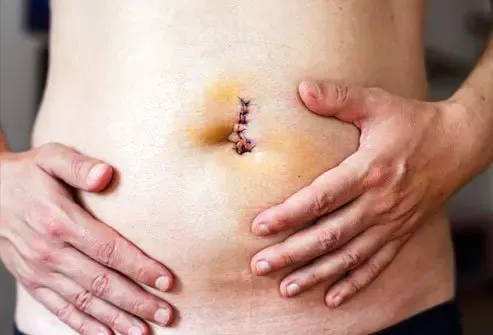
- Keep the surgical site clean and dry
- Watch for signs of infection (redness, fever, discharge)
Complications (Rare but Possible)
- Infection
- Bleeding
- Recurrence of the hernia
- Bowel obstruction (in untreated cases)
Prevention Tips
While not all hernias are preventable, you can reduce your risk by:
- Maintaining a healthy weight
- Exercising to strengthen abdominal muscles
- Avoiding heavy lifting or learning proper lifting techniques
- Managing chronic cough or constipation
- Quitting smoking (improves tissue healing)




 Get an Opinion